.jpg)
Hiring a web designer is a big investment for most small businesses, not just financially, but also in time, energy, and trust. Getting it right matters. And yet most people go into the process without really knowing what to ask. I mean why would you, you've probably never done this before. But this can mean you end up with a website that doesn't quite work, built by someone you didn't quite click with, on a platform you don't quite understand.
These are the questions worth asking before you commit. Not to catch anyone out, but because the answers will tell you a lot about whether someone is the right fit for you?
Can I see your work?
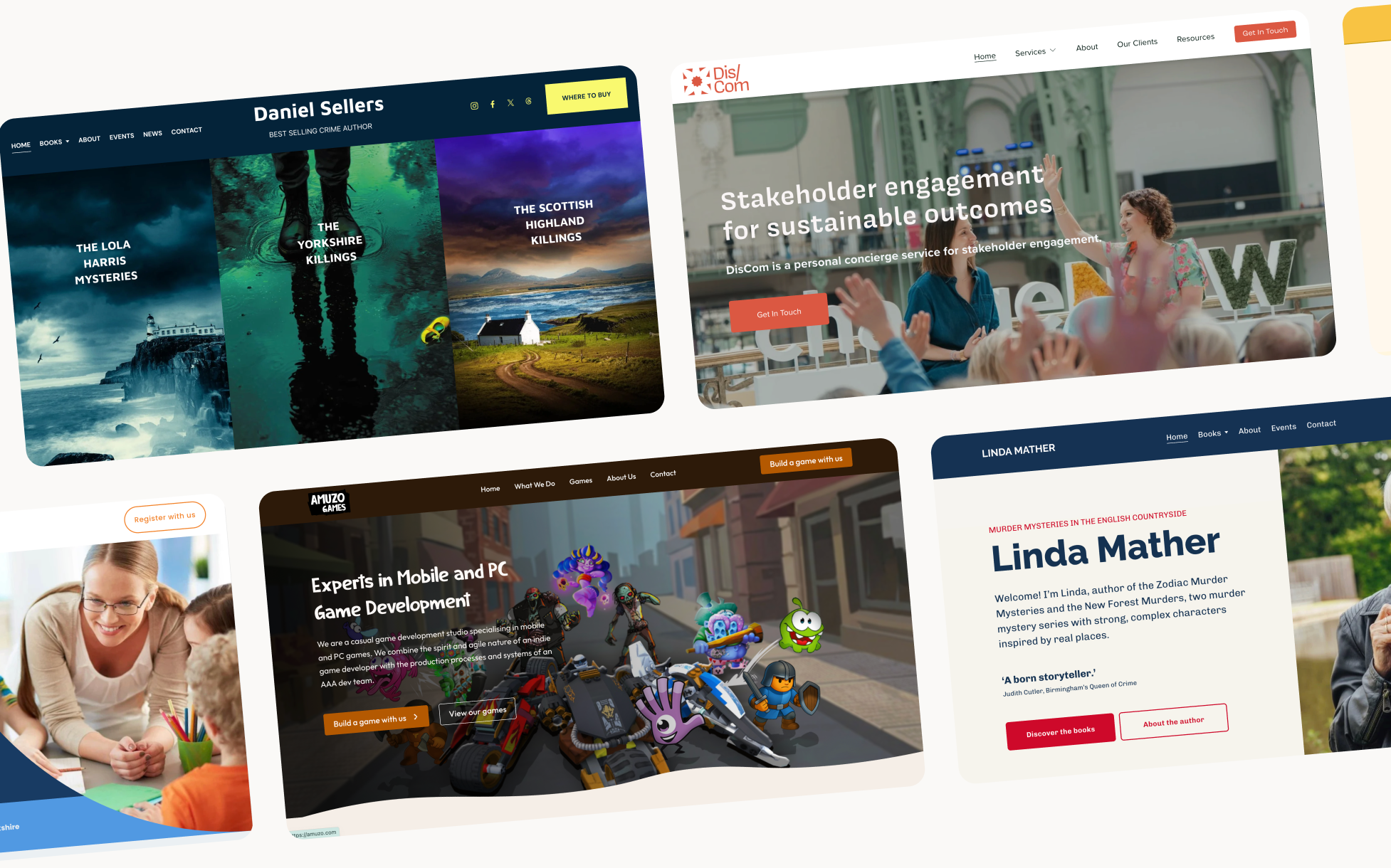
For starters, you shouldn't have to ask this. A web designer's portfolio should be front and centre on their website, easy to find, clearly presented, with real examples of real projects. If you're struggling to find their work, that tells you something.
When you do look at it, don't just ask whether you like the aesthetic. Ask whether the sites look like they belong to different clients or whether they all look the same. A good designer adapts to the business they're working with. A less experienced one applies the same template every time.
What do you charge and what's included?
Get clarity on this early, not just the headline number but what's actually in scope. Copywriting support, SEO setup, mobile optimisation, post-launch training, revisions, these vary significantly between designers and clients often don't know to ask about them until something's missing.
A transparent designer will give you a clear breakdown upfront. If the answer is vague or keeps changing, that's worth paying attention to.
What platform will you build it on, and why?
This is one of the most important questions and one of the least asked. A good designer will recommend a platform based on what genuinely fits your business, how you work, what you need to manage yourself, whether you're selling products or services, how much you want to be able to customise down the line.
The right choice depends on you, not on what's easiest for the designer.
What are the timescales?
A clear timeline upfront means no surprises. Ask when the project would start, how long each stage takes, and what the overall expected completion date is. Also ask what affects the timeline, usually it's how quickly content and feedback comes through from the client, which is worth knowing before you start.
How will you keep me involved during the project?
Some designers disappear for weeks and come back with a big reveal. Others keep you involved as it takes shape, checking in at key stages so nothing gets to the end and feels wrong.
Neither approach is universally right, but you should know which one you're signing up for. If being involved matters to you, ask about it directly.
Who owns the website after launch?
This sounds like an odd question but it's worth asking. Most reputable designers build sites that are entirely yours after handover, you own the domain, the hosting, the content, all of it. But some designers use proprietary systems or retain access in ways that make it difficult to leave or make changes independently.
Ask explicitly. The answer should be straightforward.
How will I make updates myself after launch?
A good website build includes a proper handover, so you feel confident managing the site yourself. Ask what that looks like. Ask whether you'll be able to add pages, update content, and make changes without calling a developer every time.
If the answer suggests you'll be dependent on them for every small update, factor that into your decision.
What happens after the site launches?
Things occasionally go wrong after launch, a link breaks, something doesn't display correctly on a certain device, you realise something needs changing. Ask whether post-launch support is included and for how long, and what happens after that period ends.
Most good designers offer at least 30 days of post-launch support as standard. Beyond that, ask whether they offer ongoing support and what it costs.
Have they worked with businesses like yours before?
Not essential, a good designer can adapt to any sector. But it's worth asking. Someone who's built websites for businesses similar to yours will understand the specific needs, the typical questions visitors have, and the kind of content that performs well in your space. That understanding speeds things up and tends to produce better results.
One last thing
Beyond the practical questions, pay attention to how the conversation feels. Do they listen? Do they ask good questions about your business before talking about what they'll build? Do they give straight answers or hedge everything?
The working relationship matters as much as the portfolio. A designer who communicates well, is honest about what they can and can't do, and makes you feel like you're in good hands, that's what you're actually looking for.
If the intro call feels right, it probably is.
FAQs
The intro call is usually the best indicator. A good designer will ask thoughtful questions about your business before talking about what they'll build. If the conversation feels easy and they listen well, that's a good sign. If it feels like a sales pitch, trust that feeling too.
Most freelance web designers in the UK charge between £800 and £4,000 for a small business website depending on the scope and complexity. Be wary of quotes significantly below that range, very cheap websites rarely include the strategic thinking that makes a site actually works.
A freelance designer works independently which typically means lower overheads, more direct communication, and a more personal working relationship. An agency has a larger team which can mean more resource but also more layers between you and the person doing the work. For most small businesses a freelance designer is the right fit.

%20(1).jpg)